Copyright:

Any use of the contents of this blog without approval is strictly prohibited
Showing posts sorted by relevance for query what she knew. Sort by date Show all posts

Feb 10, 2019

Sunday Salon: Thrillers in My Reading Future

New books on the TBR list:

Saving Meghan
Saving Meghan
Saving Meghan by D.J. Palmer,
Publication: April 9, 2019, St. Martin's Press
Genre: thriller
About: Munchausen syndrome by proxy


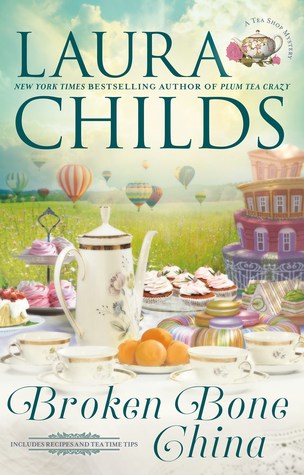
Broken Bone China (A Tea Shop Mystery #20)
Broken Bone China
Broken Bone China by Laura Childs
Publication March 5, 2019, Berkley Books
Genre: Tea Shop mystery set in Charleston
About: a drone collides with a hot air balloon


Death in Provence
Death in Provence
Death in Provence by Serena Kent
Publication: February 19, 2019, Harper
Genre: new mystery set in France
About: Penelope finds a body in her pool in Provence


Before She Knew Him
Before She Knew Him
Before She Knew Him by Peter Swanson
Publication: March 5, 2019, William Morrow
Genre: thriller
About: an unstable young woman worries about her new neighbor


The Secretary
The Secretary
The Secretary by Renee Knight
Publication: February 12, 2019, Harper
Genre: psychological suspense
About: dark story about a faithful secretary and the secrets she keeps


The Better Sister
The Better Sister
The Better Sister by Alafair Burke
Publication: April 16, 2019, Harper
Genre: domestic noir
About: two estranged sisters and family secrets

Lots of thrillers in my reading future. How about you?

What books are you reading this week?
The Sunday Post  hosted by The Caffeinated Bookreviewer,  It's Monday, What Are You Reading? by Book Date., and Mailbox Monday.What books are you reading this week?

Dec 2, 2015

Book Review: What She Knew by Gilly Macmillan


What She Knew by Gilly Macmillan, published December 1, 2015 by William Morrow Paperback.

Gilly Macmillan explores a mother’s search for her missing son, weaving a taut psychological thriller.

A brief summaryA divorced single mother of an eight-year-old boy becomes distraught when her son goes missing in the park during a regular Sunday walk with their dog.

 The cops follow multiple leads, just hints and threads of clues, as no one saw the boy in the woods during the walk or after he ran ahead of his mother to a rope swing in a secluded clearing just ahead of them. 
Rachel becomes a suspect in the case, while she does her best to follow leads to find her son. Who in contact with young Ben in his everyday life and would have reason to abduct him? Seems several people fit the bill. As days go by, no one is sure of the outcome. But a determined detective on the police force is sure he is on the right track. 

My thoughts:
I was immersed in the book, into the very realistic and well-drawn character of Rachel, who seemed helpless and put-upon, desperate to find Ben. Her ex-husband is not a big help, nor is his new and younger wife. 
The character of the detective is also intriguing, a man sure of his instincts in the case yet conflicted at the same time. 
The plot lagged a bit toward the middle, when it seemed as if nobody was getting anywhere in the case and no new clues cropped up. But read on.....exciting things start to happen fast. 

Themes in the book: Child abduction, family dynamics, divorce, single mothers, police procedure, the psychology behind some of those who abduct children. 

I gave this engrossing read five stars! Excellent for a debut novel.

I received an ARC of this book for my impartial review.

Aug 12, 2018

Sunday Salon: Magical Cats and Marriage Secrets

The Cats Came Back (Magical Cats, #10)
In general, I'm not sure how I feel about magical cats that appear and disappear and walk through walls, but the cats in this series are delightful and clever. This is the 10th in the series, so this Magical Cats Mystery  series has staying power!

Title: The Cats Came Back by Sofie Kelly
Publication: September 4, 2018, Berkley Books
Genre: cozy mystery

Plot: Owen and Hercules, the two magical cats are looking forward to taking in some fabulous sardine crackers at a musical fest in town. But then with their owner Kathleen, the cats  stumble across a dead body by the river. The victim is a close friend of theirs and a look-alike for a cabaret singer who is to perform at the festival.

The trio use their magical and regular smarts to try to solve the mystery. 

Thanks to the publisher for a review copy of this book.

Though I got only that one book in the mail last week,  I have plenty of library books and Netgalley ebooks on my TBR list.  

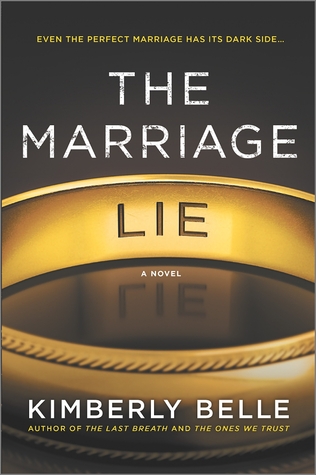
Finished last week were a couple of thrillers with a similar theme - a marriage with a dark mystery behind a secret life, the secret life of a lying spouse.
The Marriage Lie
The Marriege Lie

Under My Skin
Under My Skin
I expected both books to have twists in the plot and predicted to some degree what the twists would or could be. Under My Skin was an interesting read, though I found the plot convoluted in making its twists. Easy reading, nevertheless, for psychological suspense readers. 

Now reading: 
The Life Lucy Knew
The Life Lucy Knew
I have always liked plots that involve amnesia or memory distortions due to injury or head trauma. I luckily discovered a new book, The Life Lucy Knew by Karma Brown, at the library, about a woman who lost parts of her memory after a seemingly minor fall on the ice. She wakes up from a coma to find her domestic life is the opposite of what she remembers. She is not really married and has a live-in boyfriend whom she has always thought of as just a friend. The problem is, she wakes up still thinking of him as just a friend, much to his dismay. 

I can't wait to read on and see how this is resolved!

What books are you reading this week?
Memes:  
The Sunday Post  hosted by The Caffeinated Bookreviewer,
It's Monday, What Are You Reading? by Book Date.
Mailbox Monday. Also, Stacking the Shelves by Tynga's Reviews

Jul 4, 2021

Guest Post by Sherry Quan Lee, author of Septuagenarian

 A poetic memoir

Poetic Book Tours presents a guest post on writing, by poet and memoirist, Sherry Quan Lee. 

Septuagenarian: love is what happens when I die is a memoir in poetic form. It is the author’s journey from being a mixed-race girl who passed for white to being a woman in her seventies who understands and accepts her complex intersectional identity; and no longer has to imagine love.

 It is a follow-up to the author’s previous memoir (prose), Love Imagined: a mixed-race memoir, A Minnesota Book Award finalist.


The Writing Process by Sherry Quan Lee, guest post

 A student once said to me that she appreciated me telling the class to keep everything.  Keep each and every draft of your writing, your manuscript.  Did I say that?

 Actually, I save nothing.  Okay, next to nothing.  When did I start letting go? It’s not about keeping what brings me joy.  My writing isn’t joyful.  Although, someone once said it had sass.

 I have always decluttered.  Every two or three months I purge-this includes not only things, but sometimes people (sometimes they purge me).  But since the Pandemic, actually even before, I started a momentous purge—maybe it was when I turned 70 and knew any day now could be my last and why make my children go through my things, things they wouldn’t want. 

 My office files are fairly pristine.  Sorted, labeled, shelved:  insurance, taxes, car, condo, publications—mine and those of my friends.  Yet, as the piles of my essays and poems thin, I am heart struck to notice a journey of words that repeat, that sail forth, that bring me to my writing/life today at the age of 73.

 Septuagenarian: love is what happens when I die was published March 2021. Now that’s a scary title if not understood as a metaphor.  The mock-up of the cover has the sub-title in small font size.  What does that mean?  Are we afraid of death?  Actually, the title came from a poem within the manuscript and it stuck, the line in the title, not the poem.  It’s a metaphor.  Clarissa Pinkola Estés said What must I give more death to today, in order to generate more life? I say, what must I let go of to generate love, be love, give love, get love.

 As I fumble through boxes of what I have not yet been able to discard, I discover a few poems that haven’t yet found their way to the trash.  One poem in particular, but there are others, starts out like this:


“I woke up knowing I was dead.  The first thing I’ve been sure of all my life.  The marks stretched, some visible and some invisible.  Stretched past cardboard boxes.  None of them empty,  Each box filled with an arm or a leg.”


The two-page poem contain boxes each labeled by a decade. It ends with:  “This was love.  She had finally gotten what she wanted.  But she was no longer who she was. She didn’t recognize herself….”

 The poem was dated October 15, 1999.  Only three years after I earned an MFA. There are hand-written revisions.  There is a short version printed in red.  A note says Vulva Riot.  There is a chorus that reads:  “Stretch marks, mark time, highway marks, passing marks, remarks, earmarks, market, marker, question marks, magic markers, grave markers, stretch marks.”

 Sometimes we don’t know why we say things, do things, save things—write things.  But there is significance to our actions.  I am glad I saved this poem. If I had come across it earlier, it would be in my book.  It would be the Introduction, the Foreword.  I am going to edit the poem.  This poem will not be discarded.  There are no rules I told my students.  Save all your drafts or don’t.  Discard everything so future generations won’t be bothered, or save what has been your life line and hope someone will embrace it.

 WRITING EXERCISE:  choose a word, such as mark and explore it and all related words by sound, by meaning, or both.  Create a chorus/a short verse.  Let it be the pattern that emerges.  How do you fill the empty spaces in-between?  Are they boxes marked by decades such as:

 “One box, marked 1953-1963, contained Hostess Cup Cakes.  Campbell’s Chicken Noodle Soup.  Barbie dolls.  Captain, May I.  Sorry.  Sugar and Spice.  Axel and His Dog. Captain Kangaroo. Nancy Drew. Bobbsey Twins.  The Little Engine That Could.  Pop Beads,  Roller Skates.  Crinolines. Hula Hoops.  Red Rover.  Pony Tails.  Our Redeemer Lutheran Church. Kool Aide. “Go Tell Aunt Rhody the Ol’ Gray Goose Is Dead”. The Salvation Army Book Store on Nicollet Island. Government Surplus.  A metal Grocery Cart.  Trading Cards.  Air Raid Drills.  Standish Elementary School.  Woolworths.  Wonder Bread.” 

I probably did tell the student to save all of her writing.  I probably meant it.  Much of my writing, however, my former life was left behind when I made, yet another relationship move.  This one sudden.  Sometimes things aren’t saved because we can’t take them with us.  But sometimes, a book authored and signed by you to another poet will show up on a Google search and you know not everything is lost, it just might have found a new home. 

Sherry Quan Lee

June 26, 2021

Memes: The Sunday Post hosted by The Caffeinated Bookreviewer. Also,  It's Monday: What Are You Readingand Sunday Salon

Mar 7, 2011

Mailbox Monday: Book Surprises

Mailbox Monday was started by Marcia of The Printed Page who set up the Mailbox Monday Blog Tour, being hosted this month by Laura at I'm Booking It.

My mailbox has been getting surprises as well as review books I expected. Love it!

Dark Prince: Author's Cut Special Edition
Dark Prince: Author's Cut Special Edition by Christine Feehan
William Morrow; Special edition (March 8, 2011).

From the publisher: Christine Feehan’s New York Times bestselling Dark series: Enter the enchanting world of the Carpathians, where dark adventure, mystery, and love await... A telepathic hunter of serial killers, Raven Whitney helps to catch some of the most depraved criminals. But her work keeps her from getting close to others, and has drained her body and spirit. In need of rest and rejuvenation, she embarks for a vacation far from home.

Mikhail Dubrinsky is the prince of the Carpathians, the powerful leader of a wise and secret ancient race that thrives in the night. Engulfed by despair, fearful of never finding the mate who can save him from the encroaching darkness.... From the moment they meet, Raven and Mikhail are helpless to resist the desire that sparks between them. But just as fate unexpectedly brings these life mates together, malevolent forces threaten to destroy them.

The Bird Sisters: A Novel
The Bird Sisters: A Novel by Rebecca Rasmussen
Uncorrected proof, Publisher: Crown (April 12, 2011)

From the Publisher: When a bird flies into a window in Spring Green, Wisconsin, sisters Milly and Twiss get a visit. Twiss listens to the birds' heartbeats, assessing what she can fix and what she can't, while Milly listens to the heartaches of the people who've brought them. These spinster sisters have spent their lives nursing people and birds back to health.

But back in the summer of 1947, Milly and Twiss knew nothing about trying to mend what had been accidentally broken. Milly was known as a great beauty with emerald eyes and Twiss was a brazen wild child who never wore a dress or did what she was told. That was the summer their golf pro father got into an accident that cost him both his swing and his charm, and their mother, the daughter of a wealthy jeweler, finally admitted their hardscrabble lives wouldn't change. It was the summer their priest, Father Rice, announced that God didn't exist and ran off to Mexico, and a boy named Asa finally caught Milly's eye. And, most unforgettably, it was the summer their cousin Bett came down from a town called Deadwater and changed the course of their lives forever.

Running on Empty (Main Street Mysteries)
Running on Empty (Main Street Mysteries) by Sandra Balzo
ARC, Publisher: Severn House Publishers; Reprint edition (April 1, 2011)

Publisher's description: The first in a new series by the author of the ‘Maggy Thorsen’ mysteries - Life on Sutherton's Main Street has always been inexplicably hazardous. Like the student who bet he could paddle a beer-filled ice chest across the lake. And lost. Not to mention the occasional tourist who wandered into the mountains, never to wander back out. But the day Daisy Griggs siphoned three pints of blood from poor Mrs Bradenham seemed to set a new standard. Now more and more people are dying and unless Daisy’s daughter can figure out why, her mother may be next.

I'll be reading books in different genres - fantasy, mystery, women's fiction. Am having a great time!  What arrived in your mailbox recently?

Jul 17, 2013

Interview with Matthew Dunn, author of the spy novel, Slingshot


My review of the political thriller Slingshot has this accompanying Q and A with British author Matthew Dunn which was not posted but which I am now printing here.

About Slingshot: Master spy Will Cochrane must catch a missing Russian defector as well as one of Europe’s deadliest assassins in this action-packed follow-up to previous novels in the series, Spycatcher and Sentinel.

Former MI6 agent and author of the Spycatcher series, Matthew Dunn gives readers a peek into his former life.

 1. How did you conceive of the character Will Cochrane? How is he like you, at least you when you were working? How is he different?

 I wanted to create a character who personified the reality of intelligence work that operatives do in the field – the loneliness, the requirement to make tough decisions on the ground without being able to call for support from headquarters, the moral ambiguities of those decisions, the strong intellectual prowess, and the relentless mindset. An operative also needs a tough body, yet one that can be filled with both love and respect for the people around him. Cochrane is a lot like me when I was in MI6, though his family background is different. I’m now ten years older than he is, have two children, am recently married, and write for a living. I’m no longer Will Cochrane.

 2. Do you see writing spy novels as a way to shed light on popular misconceptions or educate readers about the realities of international politics today?

 In essence, there are two primary activities of spy agencies: the long-game of running foreign spies to obtain intelligence that can inform the foreign policies of the agency’s government; and covert, frequently extremely violent, paramilitary actions. The primacy of either activity ebbs and flows depending on the circumstances of the times. During the Cold War, all sides knew that pulling a gun was counterproductive as there was a standoff on all levels. Since then, things have been very different and that was reflected in my work as an operative, though I was also very involved in the running of foreign assets and at one time was living under deep cover with 15 different alias identities. My novels are fiction of course, but they reflect what can and does happen in the field, all of which never makes the papers unless something goes terribly wrong. Even then there are mechanisms in place to block or misdirect public scrutiny. The biggest misconception about the reality of espionage is that it is not exciting and extremely dangerous. That is very wrong. My novels reflect the realities of being in the field. I have no point to make, beyond telling it how it is.

 3. While you probably can’t get too specific about this, how do you translate your experiences as an MI6 agent into the scenes and characters in your novels?

 One of the joys of writing fiction is that I can disguise my experiences inside a fictional tale. In SLINGSHOT, you’ll read about real events and people. The names of the people have obviously been changed, and the events take place in different locations and under different circumstances. I will leave it to readers to attempt to deduce truth from fiction. When I write, I see everything through the prism of being an MI6 officer. A frequent question I will ask myself is, “what would I have done?’ It’s a useful question and there is often no right or wrong answer, just as it is in the field when you’re an operative and you’re faced with intractable problems. Will Cochrane makes mistakes, as I have done in real life, has to recover from those mistakes, and has to keep going. The people I write about are similar to people I know. The events are similar to those that I and others have been in. That’s the world I know. I concede it’s very different from the world that most others know.

 4. From James Bond to Will Cochrane, what do you think accounts for the timeless appeal of fiction featuring dashing spies?

 Though I never wrote the Spycatcher series with comparisons in mind to Bond (or for that matter, at the opposite end of the spectrum, John le Carré’s George Smiley), it is understandable that comparisons are made. I write my novels with a contemporary and very precise understanding of espionage and for that reason Cochrane is different to other fictional espionage characters. Regardless, all share in common a dislocation from the real world in favor of an understanding of a very real, yet secret world that is all pervasive and often deadly. Such characters' ability to operate in that world, and to be supremely intelligent, often charming, frequently deadly, is very intriguing. But more than that, I think the ability of operatives to be chameleons has a tremendous appeal. Readers want to know who they really are. That is a challenge.

5. SLINGSHOT concerns some of the Cold War “loose ends” left behind in Europe after the fall of the Berlin Wall. What do you think most people don’t know about what’s going on in that part of the world today?

 Most people don't understand the threat from foreign states. Right now, Russia, Iran, the Israel/Palestine conundrum, China, North Korea, and Syria are the biggest threats to world peace. Terrorism pales in comparison to what these states can do. After the collapse of communism, Russia re-built itself on a capitalist platform. It is aggressive to the West and, alongside China, does not want to be a responsible world power, as evidenced by its repeated vetoes in UN Security Council proposed resolutions to stop genocide in places like Syria. The nuclear powers who have the capability to destroy the world are the United States, Great Britain, France, Russia, and China. Three of those "big 5" are responsible. Two are not.

 6. What are Will Cochrane’s greatest weaknesses as a spy and as a person?

 Cochrane has a huge heart and yearns for another life, particularly with a woman who would love him for who he truly is. This is his strength, rather than weakness, but of course - in the world in which he operates - love and compassion are honorable traits that evil men will use against him.

 7. Could a frightening story like the one in SLINGSHOT actually take place today?

 Something similar and dreadful nearly took place. I know, but can't reveal details.

 8. There are a few pivotal roles played by women in SLINGSHOT: a retired operative named Betty who’s brought in on a vital assist; and a whip-smart CIA analyst named Suzy. Did these women come to life entirely from your imagination? Or did you work in the field with women like these?

 I've met some of the bravest women and men in the world. Gender doesn't differentiate them; they are the same breed of unique animal. I can't give you details of specifics about people I knew beyond one anecdote.

 During one of my trips to MI6's training facility, I walked off the shooting range and confronted an old woman. It was common to meet unusual people in the facility as we often received briefings from Cold War warriors, for example, from both sides of the Western/USSR fence in order to inform the contemporary work we did. But I'd never seen this woman before. She asked me what I was doing and I told her that I'd just been testing a new customized handgun. She immediately had a look of horror and said, "Guns terrify me!". I smiled, walked her to the range and showed her how to shoot it. She took the gun from me and, ignoring my instructions to position the weapon at eye-level, then held the gun against her belly and fired five shots at the target. All hit a tiny radius around the target that any Special Forces operative would have been proud to strike. I asked her how she did it, given she looked as fragile and as old as my grandmother. She didn’t answer, but just smiled and walked off.

 That evening I found out she was a former British Special Operations Executive officer who'd been parachuted into Nazi-occupied France and the Netherlands, who'd blown up German transportation lines, had - together with the resistance civilians she'd rallied - killed hundreds of Nazis, and had ultimately been captured by the Gestapo who put her in dungeons, brutally tortured her, before sending her to an extermination camp.

 Men and woman, young and old, risk their lives every day by operating in the secret world. I know many of them, and in my novels you'll meet some of them as well. Women like Betty and Suzy existed. SLINGSHOT is my heartfelt homage to them. --
-----------------------------------------------------------------------------------------------------------------------

What do you think of the interview and the author's world view? Do you agree with Mr. Dunn  about the political world as it is now?

For reviews of Slingshot, visit the Partners in Crime Book Tour schedule.

May 13, 2023

Two Memoirs and a Novel by Asian American Authors: AAPI Heritage Month

 AAPI Heritage: Memoirs/Novel by Asian American Writers


All You Can Ever Know
by Nicole Chung
Genre: adoption, biography memoir, Asian 
American
Published October 7, 2018; Catapult


My comments: All You Can Ever Know is an emotional and revealing memoir about one Korean adoptee's experiences as an adult connecting with her Korean birth parents who have also come to live in America. Nicole Chung knew that she was adopted as a severely premature baby whose prognosis did not look good for a healthy development. She later finds out the exact reasons her birth parents gave her up, and discovers she has two biological sisters. Even though her life with her American adoptive parents in Oregon was happy and healthy, none of these new revelations are easy for her to deal with, and at a time when she was starting her own family.

Nicole Chung delves into her own psyche and reveals to us her emotions, her fears and hopes growing up, and how she copes with the realities of her adoption and the convoluted procedures she had to go through to finally connect with her birth family. A must read for those interested in international adoptions and adoptees from Korea.

The book has won numerous awards. 


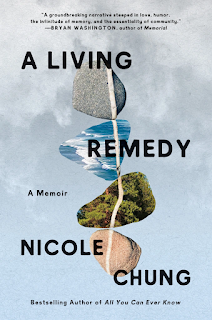
The author has a follow up memoir focusing on the middle-class American couple who were her adoptive parents and who raised her in a small town in Oregon, USA. The book, A Living Memory was published on April 4, 2023 by Ecco. In it, she also laments the inadequate and unequal access to health care that resulted in the early death of her American father, and the death of her American mother soon after from cancer.

Publisher's summarya searing memoir of family, class and grief—a daughter’s search to understand the lives her adoptive parents led, the life she forged as an adult, and the lives she’s lost. In this country, unless you attain extraordinary wealth, you will likely be unable to help your loved ones in all the ways you’d hoped. You will learn to live with the specific, hollow guilt of those who leave hardship behind, yet are unable to bring anyone else with them.


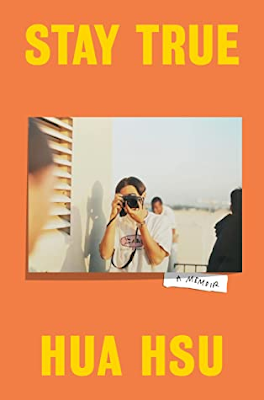
Stay True: A Memoir 
by Hua Hsu
My rating: 5 of 5 stars
Publication: September 27, 2022; Doubleday

Hua Hsu, Bard College Professor of Literature, won the 2023 Pulitzer Prize for memoir, Stay True

My review:
  
In this memoir, the author remembers and honors a college friend, Ken, who died in a mugging and senseless kidnapping while in his third year at UCLA. Hua thinks of the What Ifs that could have saved Ken from that death - what if they had gone swing dancing as Ken had wanted that night, what if he had gone back to Ken's party in the early morning so Ken would not have been alone during that mugging.

There are many reasons Hua and Ken became friends even though they had such different personalities. Both were Asian Americans, but one was Taiwanese-American and a new immigrant, the other a Japanese-American with deep roots. already established in the U.S. Their love of different kinds of music and movies, and their interest in analyzing everything for fun and intellectual sharing are only some of the things they did as college friends.

Deeply moving in parts, Stay True, the memoir, ultimately delves into the minds and hearts of young university students as they search for meaning and identity.


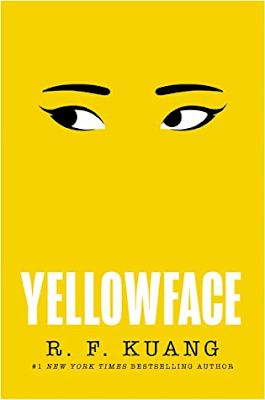
Yellowface

by 
I realized by a third of the way into the book that the title, Yellowface, refers to the old practice of using ethnic white actors to portray East Asian characters in film and on stage. 

The title was fitting for this novel, I thought, as the main character and book narrator, June Hayward, not only stole the unpublished manuscript of her Yale college friend - acclaimed Chinese American author, Athena Liu - but also tried to claim to be Chinese by changing her name from June Hayward to Juniper Song. Her book photograph also made her seem to be Asian. 

Athena's book detailed the World War II Chinese Corps of workers who went to Europe to help the Allies by doing the drudge work of war. June had to justify  knowledge of that subject matter and appear to be an expert also on the Chinese and Chinese history.

This was a complex novel as it was told from only June's point of view. I didn't know whether to hate or to pity her for her devious strategies to gain fame and fortune from the stolen manuscript and to maintain her false identity as a Chinese writer. 

I saw the book had two purposes, however, to show the history of Yellowfacing and racism, and also to reveal the pitfalls of the publishing industry for writers. June felt the publishing world's need for diversity, which led them to focus on promoting promising authors like Athena Liu, giving extra publicity and help to get a book on its way.

I thought this novel was a brilliant addition to literary fiction and Asian American literature.

Memes: The Sunday Post hosted by The Caffeinated BookreviewerAlso,  It's Monday: What Are You Readingand Sunday SalonStacking the ShelvesMailbox Monday

Apr 28, 2011

Book Review: Mothers and Daughters, a Novel by Rae Meadows


Mothers and Daughters: A Novel by Rae Meadows

"When a box of Iris's belongings arrives on Sam's doorstep, she discovers things about her mother she never knew - or could even guess...
But she is puzzled by much of what she finds. She learns that Violet, the woman she knows as her grandmother, left New York City as an eleven-year-old girl and found a better life in the  Midwest. But what was the real reason behind Violet's journey? And how could she have come that far on her own at such a tender age?"
Book description: Mothers and Daughters is a luminous novel about three generations of women, the love they share, the dreams they refuse to surrender, and the secrets they hold.

Comments: I enjoy reading books that explore the relationships between mothers and daughters. This one is especially interesting because of the secrets discovered by Samantha about her mother Violet and her grandmother Iris. Uncovering history and the thread that connect three generations of women is the theme of the story.
The ARC I received from the publisher has an added bonus - an audio CD of the novel read by Maggi-Meg Reed.

Hardcover: 272 pages
Publisher: Henry Holt and Co.; First Edition edition (March 29, 2011)
Source: ARC from publisher
Genre: women's fiction

Author: Rae Meadows is author of Calling Out, which received the 2006 Utah Book Award for fiction and No One Tells Everything, a Poets & Writers Notable Novel. She lives in Minneapolis, Minn. Visit her website at http://www.raemeadows.com/

Jun 3, 2012

Bridge of Scarlet Leaves, author interview: Sunday Salon

Interview with Kristina McMorris, author of Bridge of Scarlet Leaves
Paperback; Kensington Books; February 28, 2012
Genre: historical fiction

The idea for this novel began with a true story of two brothers during WWII, one who had fought for Japan and the other for America. While researching the subject, Kristina came across a brief mention of about two hundred non-Japanese spouses who voluntarily lived in an internment camp in the U.S. with their husbands. She was stunned and fascinated by the discovery, and knew it was a story she needed to tell.


Brief bio: As the daughter of a Japanese immigrant father and Caucasian American mother, Kristina McMorris grew up living between these two cultures. Kristina has received nearly twenty national literary awards. Her debut novel, Letters from Home, was based on her grandparents' wartime courtship. Her second novel, Bridge of Scarlet Leaves has received glowing reviews. She lives with her family in the Pacific Northwest. 

 Could you tell us about the in-depth research you did in order to write the book?


"When it comes to research, although I love having actually learned the information, highlighting details in textbooks sounds as appealing to me as a root canal. What I do enjoy is hands-on experience. So naturally, I was delighted when the Park Ranger at the Manzanar Relocation Center—after suffering through my endless list of internment questions—invited me to attend their annual pilgrimage. (Come to think if it, maybe that was his way of finally shutting me up!) Similarly, when I contacted the Go For Broke Foundation, an organization devoted to educating people about Japanese American military service, they offered to arrange in-person interviews with seven WWII veterans who have since all received the Congressional Gold Medal. I've definitely been spoiled with the amazing opportunities I've been given. As for my Air Corps research, it's hard to beat the thrill of flying on a restored B-17 bomber. For that one, I have my husband to thank. It was by far the best Mother's Day gift I could imagine! Your first two novels, Letters from Home and Bridge of Scarlet Leaves, are both set during World War II.

What originally sparked your interest in the era? 


"To be honest, up until a handful of years ago, I wasn't much of a reader, let alone a creative writer. But I was high on pregnancy hormones—if I could create life, a book didn't seem that hard—and I'd found inspiration in a collection of courtship letters my late grandfather had sent to my grandma during WWII. She had actually shared the pages with me when I was interviewing her for the biographical section of a cookbook I was editing, full of recipes she'd created and collected over decades, as a Christmas gift for the family. That's when she revealed the surprising fact that she and my grandfather had dated only twice during the war before they got married, and that their relationship had developed almost entirely through an exchange of letters. When I left her house that day I started to wonder how well two people can truly know each other through correspondence alone. The thought sparked an idea for a book, in which a soldier falls in love through a yearlong letter exchange, unaware the girl he's writing to isn't the one writing back. That very premise laid the foundation for what became my debut novel, Letters from Home.

What true story specifically inspired you to write Bridge of Scarlet Leaves? 

 "Years ago, an old family friend happened to share with me that he had fought for America while his brother served for Japan. I was captivated by the idea. But it wasn't until a decade later, when I'd found my calling as a writer, that I recalled his story and realized what an intriguing premise it would make for a novel. Combined with my undying love for the U.S. miniseries "North and the South" (perhaps more for Patrick Swayze in uniform than anything else), I set out to write my book. But in the midst of research, I stumbled across an obscure mention of roughly two hundred non-Japanese spouses who'd chosen to live in the U.S. internment camps voluntarily. This unique perspective was one I could relate to, being half Japanese myself and therefore raised between the two worlds. I called my agent that day and said, "This is it. I have my story!"

"Are you working on another book? 


 "I am! My current work-in-progress is titled Through Memory's Gate, and is the first of two women's fiction novels on my latest contract. In the meantime, my novella, The Christmas Collector, is due out in late October from Kensington Books in a holiday anthology headlined by New York Times bestselling author Fern Michaels—which I'm very excited about. "They're welcome to email me directly at Kristina@kristinamcmorris.com. I love visiting with book clubs in person, on the phone, or through Skype. And of course, for more info, including special reading group features, recipes, and excerpts from my grandfather's letters, be sure to check out my website at www.KristinaMcMorris.com

Publisher's description of Bridge of Scarlet Leaves  by Kristina McMorris:
Los Angeles, 1941 .Violinist Maddie Kern elopes with her Japanese American boyfriend Lane —the night before Pearl Harbor is bombed. When Lane is interned at a relocation camp, she remains with him as he risks everything to prove his allegiance to America, at tremendous cost.  Skillfully capturing one of the most controversial episodes in recent American history, Kristina McMorris delivers an authentic, moving testament to love, forgiveness, and the enduring music of the human spirit.

For more, visit http://www.kristinamcmorris.com/
Thanks to Dan Frazier of Rare Bird Lit for arranging this interview for the book's blog tour.

Mar 14, 2012

Book Review: The Expats by Chris Pavone

Title: The Expats: A Novel by Chris Pavone
Publisher: Crown Publishing; March 6, 2012
Genre: suspense
Objective rating: 4/5

She knew why she was picking a fight: because she was furious, because the FBI and Interpol were for some reason in her business, because she'd once made a horrible decision that would haunt her forever, and because the one person in the world she'd trusted without reservation was lying to her.

Perhaps his lie was about something benign. And maybe his lying had nothing to do with her anger. (ch. 16)


About the book: Kate Moore quit her job but didn't tell her husband Dexter the real reason why. She had also kept her real job a secret from him for 15 years. When they move to Luxembourg for Dexter's new job with a private bank, Kate has to reinvent herself as a stay at home wife and mom, a job she finds more and more tedious as time goes on.

When another expatriate American couple, Julia and Bill, make their acquaintance and insist on becoming their friends, Kate becomes suspicious of their motives and begins her own investigation of them. She then begins to wonder about her husband Dexter, begins to spy on him, go through his papers, find out new things about him. She feels nothing may be what they seem on the surface. Maybe Dexter has secrets, just as she herself has had for many years.

This is really a story about the two American couples, expatriates, how their relationship develops, how their past seems to catch up with them, how their secrets are gradually revealed to show what and who they really are.

Comments: I can't say more in detail without giving away the plot and spoiling the book for readers. The novel reads like a spy novel but is also a novel about secrets people live with, hiding them even from their loved ones. The book held my interest throughout, although the ending was a little long, the plot unfolding slowly in dialogue, although in a very realistic way.

I enjoyed the descriptions of the European cities that Kate and Dexter and their children visit, the old world atmosphere, the dank weather in winter, and more. I recommend the book for lovers of Europe and lovers of suspense.

I received a complimentary review copy of this book.

Cat on a Hot Tin Woof and Other "Chet" Books by Spencer Quinn

  Publication: April 14, 2026; St. Martin's Press, NetGalley I enjoyed reading this latest book - Chet's antics as he helps Bernie s...